Letter: Defending one’s self from attack

Mayor Victor Luca campaigned at the 2022 election that he would lobby central Government for better funding of council infrastructure and then explains he left it up to Local Government New Zealand to do the lobbying.

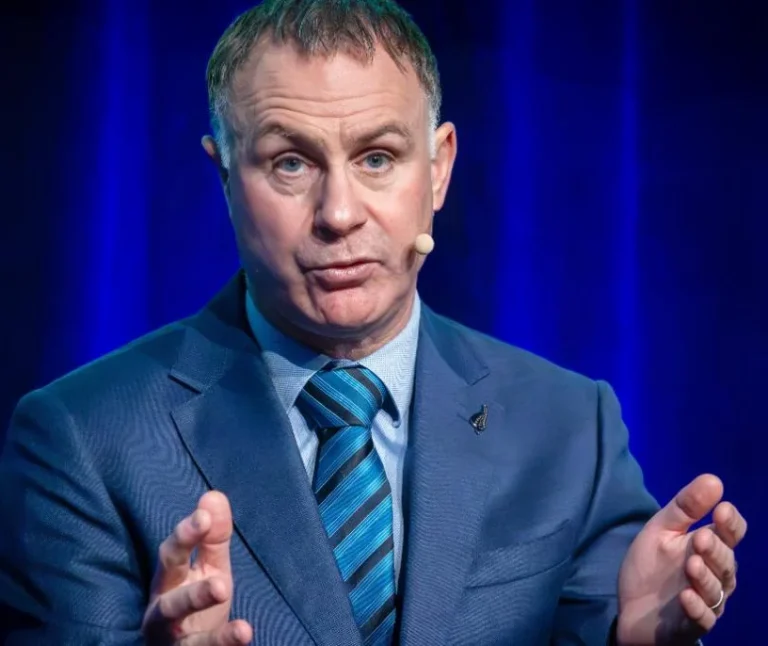
Brendan Horan, who campaigned and won a list seat for New Zealand First on their policies proclaims “anyone promising rates reform as an election tactic was selling a fantasy”.

I find myself in the bizarre position of being slammed by people for promoting the very policies they support.

Continue Reading


Opinion: Ratepayers need a more efficient property rate and valuation system

Ratepayers and local district councils suffer from an inefficient rates and infrastructure financing system. A paradigm shift in our thinking is required to prevent fixed income homeowners being forced out of their homes and stretching household budgets beyond limits for most of the rest. Several candidates vying for Whakatāne District Council suggest we should not be campaigning for recovery of GST on property rates since politicians have tried before and failed. Others suggest capping rates without alternative funding options, a user-pay approach that has bankrupted councils in the UK and Australia. I would like to share an example of a successful property rate valuation and financing system in California.

Continue Reading

Article: Govt unveils $70m fund to lure global acts, support major events

Source 1News PDF While the National led coalition government is busy telling local councils how to spend money, they’re spending $70 million doing exactly what they’re telling councils not to. The Government has announced a $70 million investment package aimed at supercharging New Zealand’s events and tourism sectors, introducing new money to attract global acts, […]

Continue Reading

Article: Former PM Sir Geoffrey Palmer’s stark warning about NZ’s democracy

A central criticism he made of New Zealand was the erosion of Parliamentary processes by successive governments – particularly the use of urgency for passing legislation, by which normal processes scrutinising bills are skipped.

“If you want to process a great deal of legislation, the Parliament’s not sitting enough to deal with it,” said Palmer, noting that drafting legislation effectively was time-consuming and difficult.

Continue Reading

Opinion: What the heck is happening with rates?

Rates are going through the roof and people are struggling. Even so, I’m going to say something that most mayoral candidates won’t admit. Rates are going to keep going up and anyone who promises that they can stop that happening is lying to you. The Government would sack the council and install commissioners if we did what it would take to stop rates increasing.

Continue Reading

Letter: Who’s to blame for dormant town centre?

Since the election of the National-led coalition government, 33,000 more people were unemployed, we’re in the deepest recession in 30 years (aside from Covid), record numbers of people are needing government support to get by, free prescriptions have been cut, half-priced public transport has been cut, food bank funding has been cut and all this despite borrowing $15 billion dollars to fund tax cuts that we were told would fix the cost of living crisis. While the Government shovelled billions to big tobacco and mining companies, 2700 businesses went bankrupt in the last year, and to top it off I read that Nicola Willis burned $671 million from the Bank of Taxpayers on no new ferries.

Continue Reading

Article: Hutt mayor Campbell Barry warns against council spend-ups after water reforms

Barry told The Post he was concerned that some candidates in the coming local government election were suggesting that shifting water services from council balance sheets opened up new spending or debt to invest.

“It’s a dangerous position because there will potentially be the desire to load up with additional spending, additional debt ‒ councils may want to do that because their financial or balance sheet may look a lot better.

“But of course, it will be the ratepayers who get hit with that, because they will still have to be paying water bills.”

He said with rates rises already unaffordable in many places, there should instead be a corresponding drop in rates, in line with that of water bills.

For example, he said if the new Wellington water provider had already been created, the rates rise at Hutt City Council would have dropped from 12.6% to 7.6% — a 5 percentage point decrease.

Any decrease in rates less than 5 percentage points would therefore actually be an increase to the ratepayer.

Continue Reading

Article: List of core services ‘bizarre’ – Tanczos

Source Whakatāne district councillors have expressed surprise that cemeteries, public toilets, animal control, liquor licences and consents are not considered core services for councils by the Government. “This is bizarre,” councillor Nandor Tanczos said. “The (Coalition Government’s) list of core services doesn’t include a whole bunch of functions that the Government itself requires that we […]

Continue Reading

Article: The Government’s water reforms may not be going to plan

Many councils will be delivering water services “in-house”, also limiting their debt-borrowing capacity.

Already the Department of Internal Affairs has sent letters to six councils asking they reconsider going it alone, and join with their neighbours.

But with the September 3 deadline approaching, the Government may instead be reaching for the stick.

Local Government Minister Simon Watts can appoint Crown facilitators or specialists to push councils towards forging regional entities.

This may mean the Government finds itself, to some degree, in the position Labour was — effectively compelling councils to work with their neighbours.

And it would be doing so after letting councils determine their own fate and, in a case like Stratford District Council in Taranaki, acting on the views of their constituents.

Essentially, the Government would be riding roughshod over local opinion.

Continue Reading

Article: Wellington City Council pushes back on Government’s ‘back to basics’ bill

Wellington City Council did support several parts of the bill, such as measuring council performance, strengthening transparency and accountability and providing regulatory relief.

Core services have been defined in the bill as network infrastructure, public transport services, waste management, civil defence emergency management, libraries, museums, reserves, and other recreational facilities.

While museums were listed as a core service, festivals, live performances, stadiums, concert halls and large theatres were not. The submission points to the economic benefit of events such as the council-supported World of WearableArt show, which contributed more than $31 million to the city last year.

Continue Reading

Is Returning GST To Councils ‘Ultra Left Wing Spin’?

Mayors and chairs commented to the survey “that a share of the GST revenue generated in their districts should be returned to local government”, saying GST was the “clear favourite” revenue stream of people surveyed.

Southland Mayor Gary Tong told the survey Treasury should “actively look at” the amount of road user charges and GST paid by people in his region, which was then spent in other parts of the country.

Waipā District Council Mayor Jim Mylchreest said councils should get a “share of GST”, particularly the GST paid on council rates as well as a share of GST paid on the development of new sections.

“LAs [local authorities] and developers provide all of the services and take all of the risks and Central Government pockets the GST on every new section created,” Mylchreest said.

Act and National have recently floated similar ideas. National wants to at least explore the idea of councils getting the GST collected on rates, while Act has launched a policy to share half of the GST revenue earned from building a new house with whichever local council issued that house’s consent.

Continue Reading

Article: Bay of Plenty Regional Council Confirms Candidates for 2025 Local Elections

Source The Bay of Plenty Regional Council has released its final list of candidates for the upcoming local body elections in October 2025. Governance Manager Steve Groom says he is pleased with the diversity and number of nominations received this year, noting that every regional council constituency will now hold an election. “We have more […]

Continue Reading

Article: Councillors tired of being ‘beaten up’ and blamed by central government

In a statement yesterday, Local Government Minister Simon Watts said some households were getting frustrated by unfair rate hikes during the cost-of-living crisis.

It followed comments at the recent Local Government NZ (LGNZ) conference, where Watts compared councils to children and suggested that letting them do what they wanted might lead to bad choices.

Olds, who attended the conference, told his colleagues and LGNZ representatives that he was disappointed that councils continued to get “beaten up by central government” over things that were out of their control.

Councils had defended rising rates as they were dealing with increased infrastructure costs, unfunded mandates, insurance, and inflation.

LGNZ chief executive Susan Freeman-Greene said tensions between local and central government were “a challenge”, and that councils bore the impact of frequent changes to government policy.

Continue Reading

Article: Calls for ‘department for local government’ to oversee councils

“There are some steps available to central government such as the appointment of an observer or the replacement of a council with commissioners … but that tends to be used as a last resort and only after ministerial intervention.”

The agency he suggested would be set up like the Public Service Commission, “with the ability to provide early, proactive support for local government and effective advice to ministers when issues arise”

Continue Reading