Article: Govt unveils $70m fund to lure global acts, support major events

Source 1News PDF While the National led coalition government is busy telling local councils how to spend money, they’re spending $70 million doing exactly what they’re telling councils not to. The Government has announced a $70 million investment package aimed at supercharging New Zealand’s events and tourism sectors, introducing new money to attract global acts, […]

Continue Reading

Article: Hutt mayor Campbell Barry warns against council spend-ups after water reforms

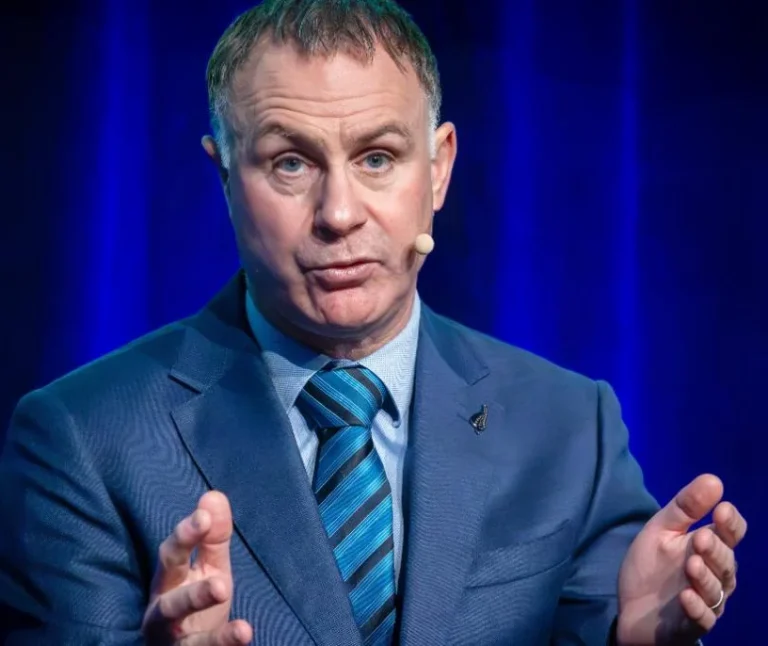
Barry told The Post he was concerned that some candidates in the coming local government election were suggesting that shifting water services from council balance sheets opened up new spending or debt to invest.

“It’s a dangerous position because there will potentially be the desire to load up with additional spending, additional debt ‒ councils may want to do that because their financial or balance sheet may look a lot better.

“But of course, it will be the ratepayers who get hit with that, because they will still have to be paying water bills.”

He said with rates rises already unaffordable in many places, there should instead be a corresponding drop in rates, in line with that of water bills.

For example, he said if the new Wellington water provider had already been created, the rates rise at Hutt City Council would have dropped from 12.6% to 7.6% — a 5 percentage point decrease.

Any decrease in rates less than 5 percentage points would therefore actually be an increase to the ratepayer.

Continue Reading

Article: List of core services ‘bizarre’ – Tanczos

Source Whakatāne district councillors have expressed surprise that cemeteries, public toilets, animal control, liquor licences and consents are not considered core services for councils by the Government. “This is bizarre,” councillor Nandor Tanczos said. “The (Coalition Government’s) list of core services doesn’t include a whole bunch of functions that the Government itself requires that we […]

Continue Reading

Article: The Government’s water reforms may not be going to plan

Many councils will be delivering water services “in-house”, also limiting their debt-borrowing capacity.

Already the Department of Internal Affairs has sent letters to six councils asking they reconsider going it alone, and join with their neighbours.

But with the September 3 deadline approaching, the Government may instead be reaching for the stick.

Local Government Minister Simon Watts can appoint Crown facilitators or specialists to push councils towards forging regional entities.

This may mean the Government finds itself, to some degree, in the position Labour was — effectively compelling councils to work with their neighbours.

And it would be doing so after letting councils determine their own fate and, in a case like Stratford District Council in Taranaki, acting on the views of their constituents.

Essentially, the Government would be riding roughshod over local opinion.

Continue Reading

Article: Wellington City Council pushes back on Government’s ‘back to basics’ bill

Wellington City Council did support several parts of the bill, such as measuring council performance, strengthening transparency and accountability and providing regulatory relief.

Core services have been defined in the bill as network infrastructure, public transport services, waste management, civil defence emergency management, libraries, museums, reserves, and other recreational facilities.

While museums were listed as a core service, festivals, live performances, stadiums, concert halls and large theatres were not. The submission points to the economic benefit of events such as the council-supported World of WearableArt show, which contributed more than $31 million to the city last year.

Continue Reading

Article: Councillors tired of being ‘beaten up’ and blamed by central government

In a statement yesterday, Local Government Minister Simon Watts said some households were getting frustrated by unfair rate hikes during the cost-of-living crisis.

It followed comments at the recent Local Government NZ (LGNZ) conference, where Watts compared councils to children and suggested that letting them do what they wanted might lead to bad choices.

Olds, who attended the conference, told his colleagues and LGNZ representatives that he was disappointed that councils continued to get “beaten up by central government” over things that were out of their control.

Councils had defended rising rates as they were dealing with increased infrastructure costs, unfunded mandates, insurance, and inflation.

LGNZ chief executive Susan Freeman-Greene said tensions between local and central government were “a challenge”, and that councils bore the impact of frequent changes to government policy.

Continue Reading

Article: Calls for ‘department for local government’ to oversee councils

“There are some steps available to central government such as the appointment of an observer or the replacement of a council with commissioners … but that tends to be used as a last resort and only after ministerial intervention.”

The agency he suggested would be set up like the Public Service Commission, “with the ability to provide early, proactive support for local government and effective advice to ministers when issues arise”

Continue Reading

Article: Govt winds up council reform storm

“We all want lower rates increases. I want lower rates increases, I know you want lower rates increases, I hear from my community they want lower rates increases. But it can’t be at the expense of our children picking up the tab because of our negligence today.”

The Selwyn mayor tells Newsroom a key problem is councils have few alternatives to raise money.

The best tool the Government could give councils, in his opinion, is to return GST spending on new houses locally. “That would be a game-changer for us,” he says, noting between 1000 and 3000 houses have been built each year in Selwyn over the past five or six years.

Continue Reading

Article: Teen cycles from Whakatāne to Parliament for Māori wards

After biking almost a thousand kilometres encouraging people to ‘say yes to Māori wards’, a 15-year-old Whakatāne High School student pulled into Parliament’s forecourt with a wheelie.

Jack Karetai-Barrett left Whakatāne on 28 June aboard his Focus Atlas 6.7 gravel bike covering more than 894km to Wellington.

“If I could keep going I would, but school holidays finish soon and I won’t be able to get home in that time,” he said.

Continue Reading

Article: The argument against council rate caps

OPINION: What do we do about 78 councils, rising rates and the need to improve efficiency and focus on the basics?

Some argue the Government should simply pass a law to cap rates and let ‘the market’ sort itself out. But history tells us blunt interventions often generate unintended consequences.

When councils have focused purely on rate minimisation in the past, they’ve generally cut infrastructure maintenance, inspections and deferred capital investment, contributing to a significant proportion of New Zealand’s $200 billion infrastructure deficit.

Government wants to grow the economy and speed up housing development. Yet, ironically, it needs councils to enable housing growth, through investments in roads, water, transport and other essential services.

Capping rates without addressing the funding model simply kneecaps councils’ ability to invest. Without money, projects don’t proceed and assets deteriorate.

Continue Reading

Article: Coalition finds a handy distraction in council bashing

Councils are getting around 10% of their budgets from Crown grants when in other countries it’s more like 15-20% or more. Or, as the S&P analyst says, “you’re told to do more infrastructure spending, and you’re getting less support”.

This is the opposite of localism and resetting the relationship between central and local government that Christopher Luxon and National campaigned on two years ago. Instead, giving the housing minister the power to override democratically elected council decisions, even if it’s an interim measure ahead of new RMA laws, smacks of subverting the democratic process.

And it’s those changes to the Resource Management Act that the coalition Government is itching to get completed because it presents a compelling reason to get rid of the country’s 11 regional councils.

Continue Reading

Article: Council or bust for community board stalwart

“I care for our district and I want to see thriving communities for all peoples – and this means making difficult, thoughtful, future-focused decisions within a constrained council budget. These decisions are never black and white. Good decision-making relies on balancing competing priorities for the benefit of all.”

“I have a solid understanding of local government through Community Board work, and through my time on the National Community Boards Executive Committee. We’ve been advocating for community boards to be harnessed and supported to be a more effective tool for better local decision-making.”

Continue Reading

Postpone The Tax Cuts Campaign – 2024

In the leadup to National’s first budget I protested that the planned tax cuts were unaffordable and stood on a roundabout in my home town and let everyone know I was concerned. The support was just incredible.
Soon I was joined by more and more people and we made a big noise predicting that everything that has happened was the only outcome from such disastrous policy. The Postpone The Tax Cuts Facebook Page remains a valuable historical resource recording how many people predicted the disaster that is this National led coalition government would be.

Continue Reading